Vendor Lock-In And Agency Tool Sprawl
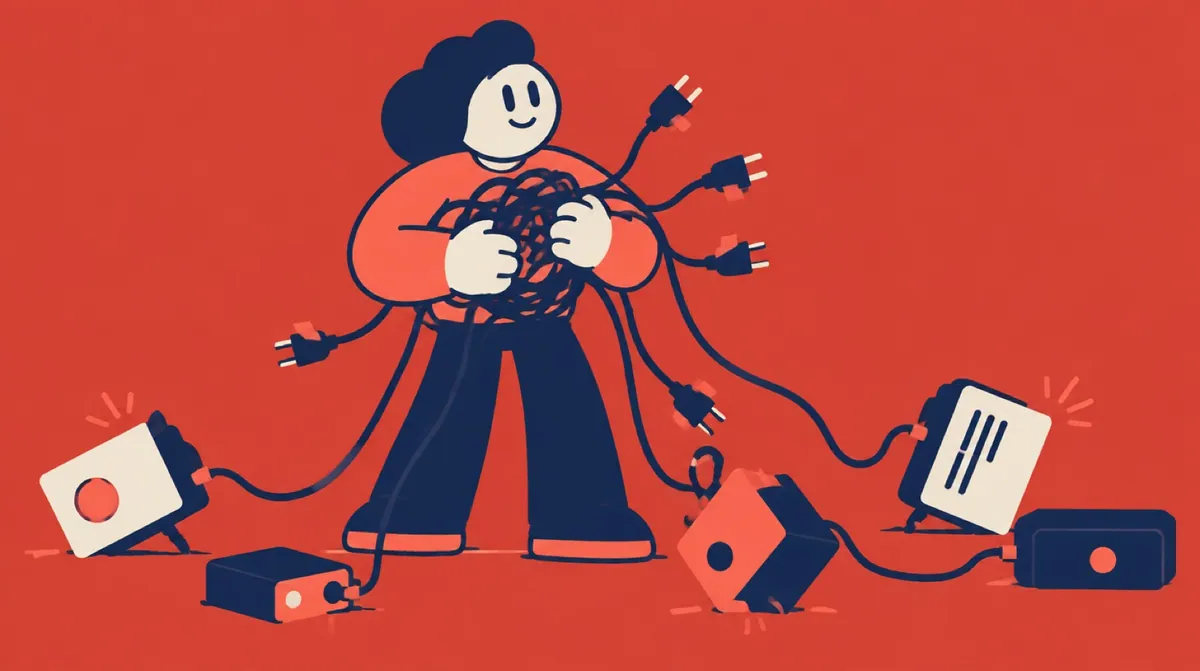
Agency tool sprawl did not arrive as a procurement decision. It arrived as forty individual card payments made by people trying to finish something on a Thursday.
Two years later the typical agency is running an unmapped stack: several generators, a transcription service, two editing tools, a meeting recorder, and whatever a client insisted on for one project and nobody cancelled.
What Tool Sprawl Costs Beyond The Invoices
Three things. Money, which is the smallest of them and the easiest to see. Exposure, because every additional service is another place client material sits under terms nobody read. And fragility, since work in progress lives in accounts tied to individuals rather than to the agency.
The last one is the expensive surprise. When a person leaves, the asset history of an account can leave with them, and the agency discovers this during a handover rather than before it.
Lock-In Is Quieter Than It Looks
Vendor lock-in in this category is rarely contractual. It is habitual. A team learns a way of working, builds prompts and presets around it, and the cost of moving is retraining rather than a termination fee.
That is a real switching cost even when the contract is monthly, and it is the reason a tool that becomes central deserves the scrutiny an agency would give a five-year licence.
Nobody signed a five-year commitment. They just built six months of habits that nobody wants to rebuild.
The Cleanup That Is Worth Doing
List what is in use, which most agencies cannot do today. Move anything that touches client work onto accounts the agency owns. Agree who may approve a new tool and give them a two-day turnaround, because a slow process guarantees a shadow one.
And keep one thing deliberately portable: the prompts, presets and reference libraries a team has built. That is the agency's accumulated knowledge, and it should never live only inside somebody else's product.
Related: where agency margin sits in an AI workflow.
More in The AI Shift.
Advertisement