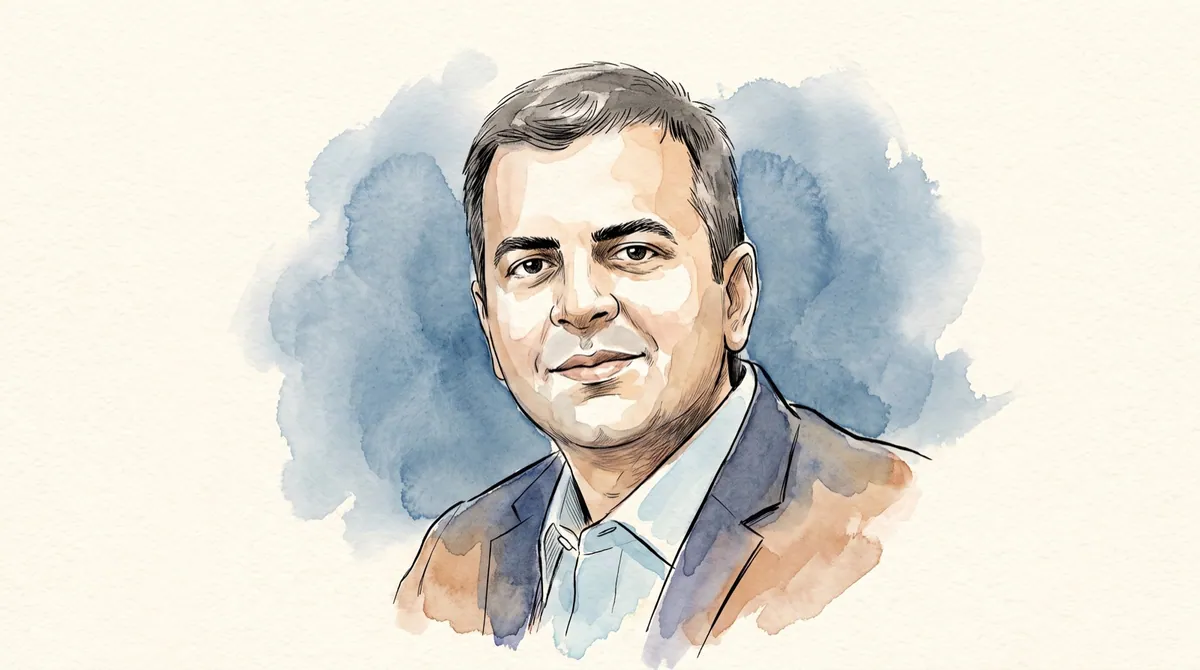
Bhavish Aggarwal, Who Kept Changing The Category
Ola arrived in a market where getting a taxi meant negotiating, and getting an auto meant negotiating harder. What it removed was not distance. It was the argument at the start of every journey.
Bhavish Aggarwal, an IIT Bombay computer science graduate, founded Ola in 2010 in Bengaluru with Ankit Bhati, under ANI Technologies. In 2017 he founded Ola Electric, which moved the company into building two-wheelers.
The first brand was built on removing friction
Ola's early marketing had a simple job: explain that the price was fixed and the vehicle would arrive. In a category defined by uncertainty, that message needed no cleverness, and the company spent its money on availability rather than on ideas.
Adding autos was the more interesting brand decision. It accepted that the mass Indian commute is not a sedan, and it made the app useful to people who were never going to be cab customers.
The second brand had to create desire
An electric scooter is a different sale. Nobody needed persuading that a scooter exists; they needed persuading to change something that works, spend more upfront and trust a new kind of machine.
So Ola Electric was launched like a consumer-technology product rather than like a vehicle: a reveal, a booking window, specifications argued about online. That borrowed the playbook of phone launches, which was a genuinely new idea in Indian two-wheelers.
Removing a problem sells itself. Creating a want has to be built, and the two need opposite kinds of marketing.
Where the approach strains
A launch-led brand sets expectations at their highest before the product is in the market at scale. Service, delivery and after-sales then have to match a feeling created by a stage.
That gap is where two-wheeler brands are traditionally won or lost in India, because the category's loyalty has always been built at the service centre rather than at the showroom.
The founder as the channel
Aggarwal has run both companies with his own public commentary as a primary channel. That is fast, cheap and unusually direct, and it carries the standard cost: the founder becomes the brand's most quoted spokesperson in a good quarter and in a bad one.
What other founders take from it
That a company can change its category and keep its name, but not its marketing model. The muscle that makes a service ubiquitous is not the muscle that makes a product desirable.
Related on Ad Tribe
Advertisement