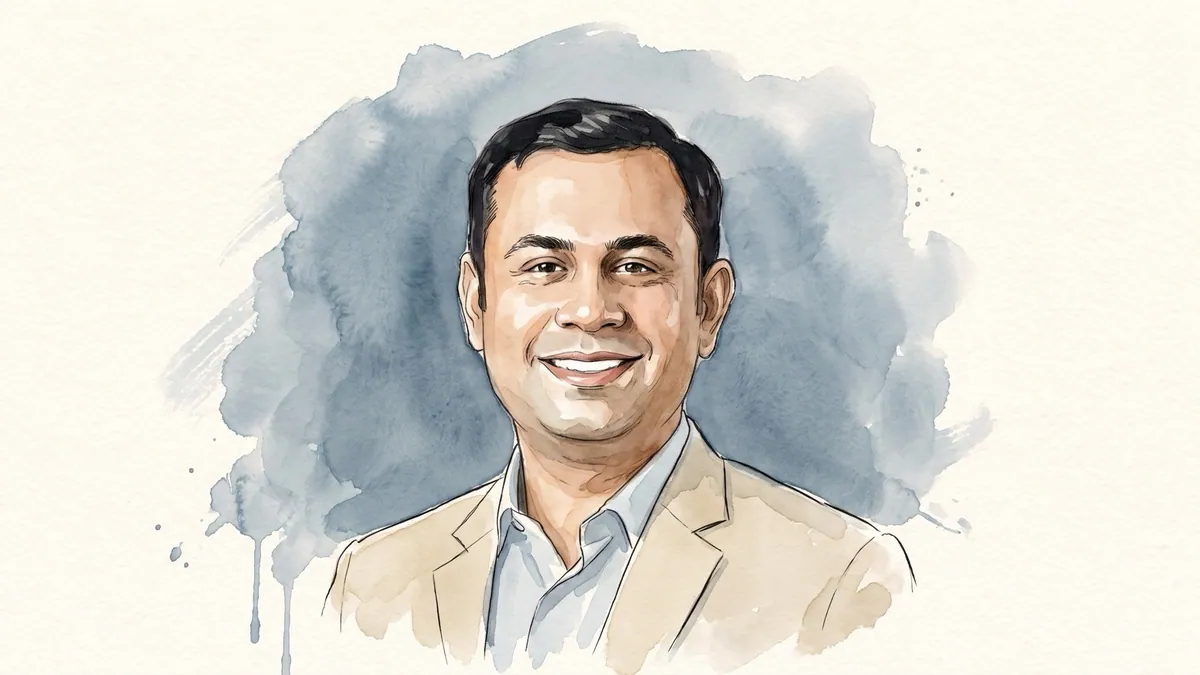
Harshil Mathur, Who Built a Brand for People Who Read Documentation
Most payments companies sell to a finance head. Razorpay was built for the engineer who has to make the integration work on a Friday, and that choice decided almost everything about the brand.
Harshil Mathur founded it in December 2014 with Shashank Kumar. Both are IIT Roorkee graduates; Mathur had been a field engineer at Schlumberger. Razorpay went through Y Combinator, one of very few India-focused companies to do so at the time.
Why the developer is the actual buyer
In a payment gateway decision the nominal decision-maker is commercial, but the recommendation almost always comes from whoever has to integrate it. If the documentation is bad and the API is awkward, that person will say so, and the deal moves.
Recognising this reframes the marketing problem entirely. The audience is small, technical, deeply sceptical of claims, and completely immune to conventional brand advertising.
What you build for that audience instead
Documentation, mainly, treated as a product rather than as support material. Sandbox environments that work. Error messages that say what went wrong. Integration that takes hours rather than weeks.
None of that appears in a marketing budget and all of it is brand-building, because in developer tools the reputation is transmitted by people who have used the thing telling other people whether it was painful.
In developer-facing products the documentation is the advertisement, and it is read far more carefully than any campaign ever is.
The problem being solved was real
Indian online payments at the time meant long onboarding with a bank, opaque approvals and integrations that were genuinely difficult. For a small business wanting to accept money online, the infrastructure was the obstacle.
A brand promising to remove that has an unusually clear proposition, and it can be verified by the customer in an afternoon, which is the fastest possible route to trust.
Scaling past the original audience
Razorpay now reports payment volumes in the hundreds of billions of dollars annualised and millions of merchants, and has expanded well beyond a gateway into banking, payroll and lending products.
That expansion is where developer-first brands usually struggle. The larger the customer, the more the decision moves to people who never read the documentation and do care about enterprise assurances, and the brand has to learn a second language without losing the first.
What the record shows about B2B branding
That the audience for a technical product is not the audience on the org chart. Razorpay's brand was built by people recommending it to each other, in a market where the recommendation carried professional risk for the person making it.
That is a far more demanding endorsement than a consumer one, and it is why the product had to be the marketing rather than the other way round.
Related on Ad Tribe
Advertisement