Can Synthetic Audiences Replace Real Research
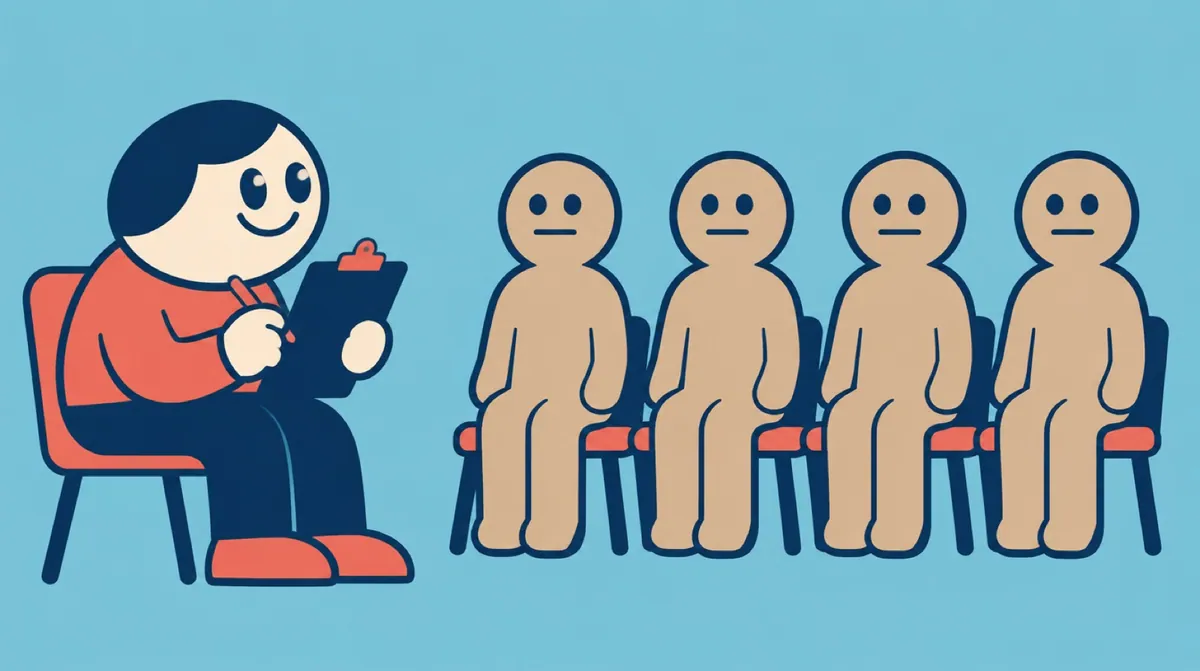
Synthetic audiences are seductive for an obvious reason. Real research is slow, expensive and frequently arrives after the decision has been made anyway.
A simulated panel removes all three problems. It also removes the one thing research exists to supply, which is contact with a person who does not think like the people in the room.
What Synthetic Audiences Are Good For
Rehearsal, mostly. Pressure-testing a proposition for obvious holes before it reaches a real respondent is a legitimate use, and it saves a genuine round of fieldwork being spent on a version that was never going to survive.
Language screening is another. A simulated panel will reliably tell you that a phrase is ambiguous, because ambiguity is a property of the text rather than of the audience.
Where They Fail Quietly
A simulated respondent is built from what has already been written down. That makes it a good model of yesterday's opinion and a poor model of a market that is moving, which is the only kind of market anyone commissions research about.
It also cannot be uncomfortable. The most valuable moment in a real group is when somebody says something the moderator did not have a question for, and the team realises the brief was built on an assumption nobody had tested. Simulation has no mechanism for producing that moment, because it is reproducing an average rather than meeting a person.
Research is not there to confirm the plan. It is there to introduce the one fact the plan did not account for.
The Risk Of Using It To Win Arguments
The practical danger is not that simulated panels are wrong. It is that they are quotable. A number attributed to a synthetic sample looks identical on a chart to a number from real fieldwork, and the chart is what travels into the client meeting.
Agencies that use these tools should mark them plainly in every document, in the same way they would mark a desk estimate. That is not caution for its own sake; it is what keeps the difference visible when a decision is being made six weeks later by somebody who was not in the room.
Related: the measurement problem AI inherits.
More in The AI Shift.
Advertisement