Who Owns An AI-Generated Idea: The Client, Agency Or Technology Platform?
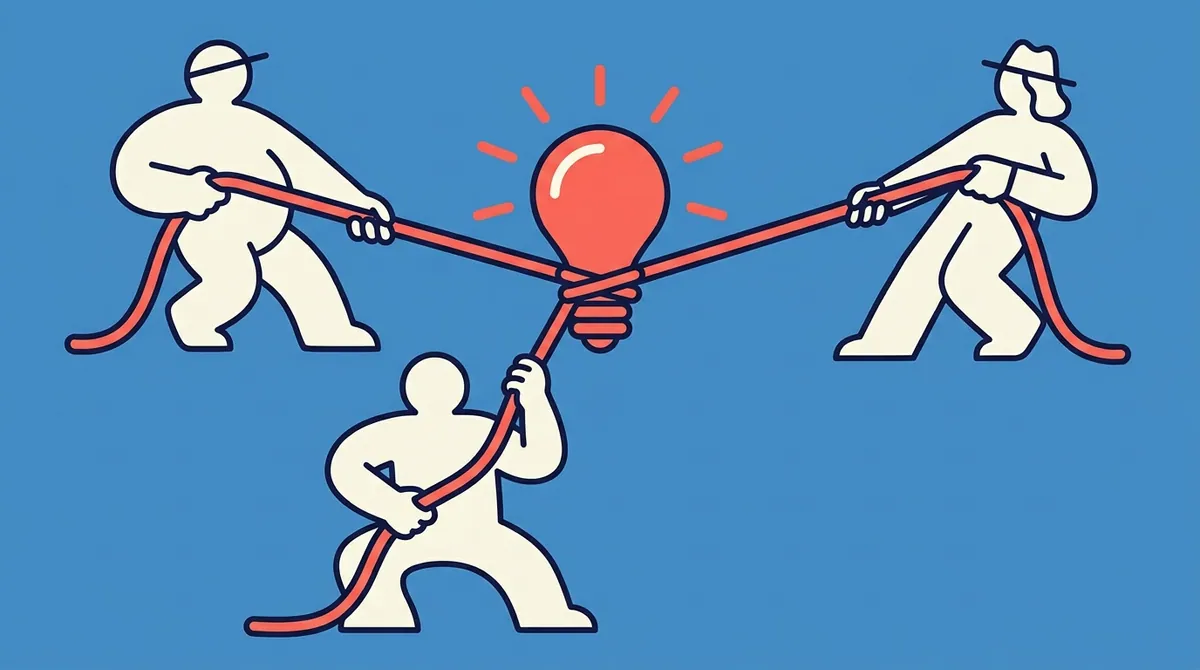
A traditional agency contract answers the ownership question in one clause: the client pays, the client owns the work. AI has quietly complicated a question most contracts never expected to need revisiting.
Standard agency agreements have long treated creative output as work-for-hire: the agency is paid to produce it, the client owns it once delivered, and the arrangement rarely needed closer examination because both sides understood what "the work" meant. An AI-generated idea disrupts that clean picture, because it usually involves at least three parties with a plausible claim: the client who commissioned it and paid for it, the agency whose prompting, curation and creative direction shaped the actual usable output, and the AI platform whose terms of service may include its own rights over generated content depending on the tool and the plan being used.
Why the old assumption doesn't map cleanly
Work-for-hire assumed a human creator whose labour the client was purchasing outright. AI-assisted work blurs that because the actual creative contribution is split across a prompt written by an agency strategist, a model trained by a third-party company on data neither the agency nor the client had any say over, and a curation process that decided which of many generated outputs was worth using at all. None of the existing contract language most agencies still use was written with that three-way split in mind, which means a lot of current agreements are silent on a question that increasingly matters.
Where this actually creates risk
The risk is not usually theoretical. Some AI platforms' terms of service reserve rights to use generated outputs for training or retain some claim over how the content can be reused, terms that a client assuming full, exclusive ownership of their campaign material may not know exist until a dispute forces the question. A client who later wants to trademark a tagline, defend an idea from a competitor's similar use, or simply confirm they can use the asset across every market without restriction needs a contract that actually answers whether the AI platform's terms create any limitation, and most legacy agency contracts do not.
The old contract answered who owns the work. It never had to ask who else might have a claim on it.
What needs to change in agency-client agreements
The practical fix is not complicated, but it does require deliberate attention: agencies and clients need explicit new clauses covering which tools were used, what those tools' terms of service say about ownership and reuse, and who bears responsibility if a platform's terms turn out to limit the client's rights later. That is a legal conversation most agency-client relationships have not had yet, and the ones having it now are protecting themselves against a dispute the rest of the industry has not run into at scale, yet.