Ranjani Krishnaswamy, the Marketer Who Made Tanishq Argue for Itself
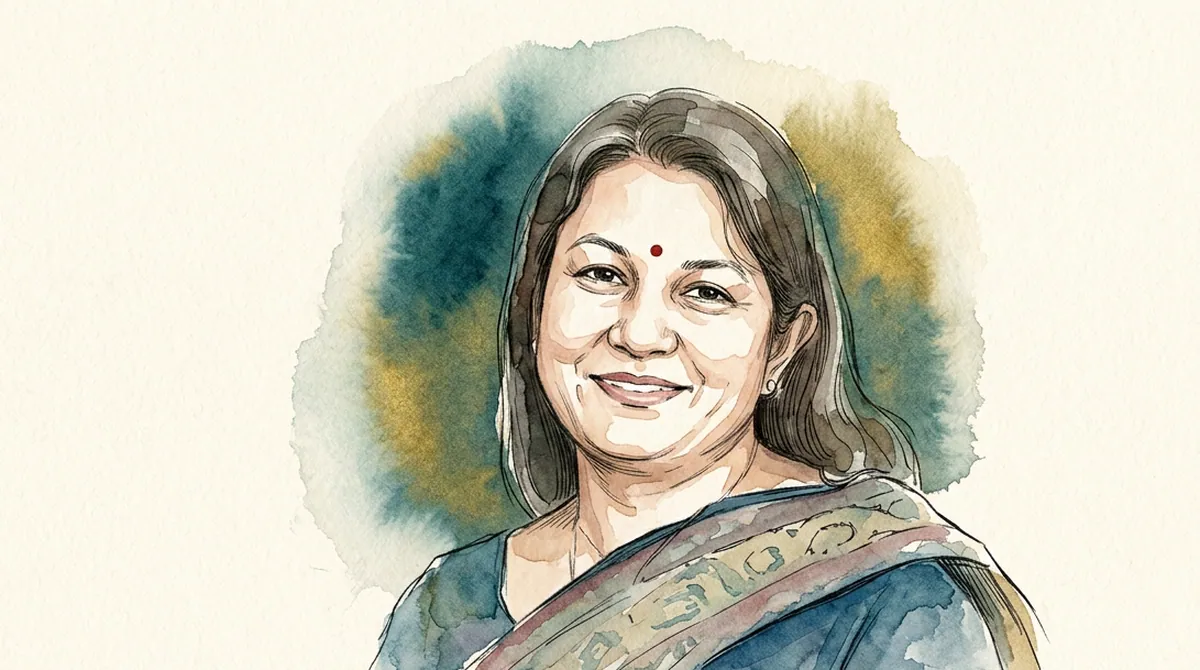
A jewellery marketer who tried to make a conservative category say something contemporary, and paid for it once.
Jewellery advertising in India spent decades selling the same three things: purity, occasion, and family approval. Ranjani Krishnaswamy's career at Tanishq is a study in what happens when a marketer decides a category that conservative can also carry a point of view, and what it costs a brand when that point of view meets an audience that was not asking for one.
From FMCG discipline to a jewellery counter
Krishnaswamy did not start in jewellery. Her marketing grounding came from roughly a decade at Unilever, followed by stints at Wipro and HT Media, before she moved into Titan's jewellery division as General Manager of Marketing. That FMCG background matters more than it might seem. Selling soap and shampoo teaches a very specific discipline, that a brand has to earn a place in a routine purchase through consistent meaning, not a single clever campaign. Bringing that discipline to a big-ticket, occasion-driven category like bridal jewellery was itself a bet that Tanishq's marketing could behave less like a seasonal push and more like a running argument for the brand.
The job: making Tanishq the default for every Indian wedding, not just some
The specific mandate Krishnaswamy has been publicly associated with is widening what counts as a Tanishq occasion. Rivaah, the brand's bridal jewellery platform, was built to position Tanishq as the wedding jeweller for every Indian community rather than one region's aesthetic. Campaigns like "When It Rings True" pushed the brand into engagement rings, a purchase moment Indian jewellery marketing had mostly ignored in favour of the wedding day itself. Others, including "Every Woman a Diamond" and the Alekhya collection built around Indian art and painting traditions, tried to pull jewellery buying away from ritual alone and toward self-expression and personal milestones.
Why that mattered to Titan's bigger jewellery strategy
None of this is incidental to Titan's larger plan for Tanishq. Organised jewellery retail was always competing against a fragmented, trust-based local jeweller market where relationships mattered more than branding. Expanding the list of occasions that justify a Tanishq purchase, engagement, a promotion, a birthday, not just a wedding, is a straightforward way to grow transaction frequency in a category people otherwise buy into only a handful of times in a lifetime. Marketing that keeps finding new reasons to walk into a Tanishq store is doing real commercial work, not just brand polish.
The campaign that tested how far that point of view could go
The honest complication in this story is Ekatvam, a 2020 campaign built around craftsmanship and unity across India's communities. One ad in that campaign, depicting a Hindu family hosting a traditional baby shower for their Muslim daughter-in-law, was pulled within 48 hours after a coordinated backlash that included threats against store staff. It is a genuine case study in the limits of purposeful advertising: a message the brand believed was true to its "oneness" positioning collided with an audience segment actively hostile to that message, and Tata Group chose to withdraw the ad rather than hold the line. Whatever the internal calculus, it is a reminder that progressive brand storytelling in India's jewellery category carries real, sometimes physical, risk for the people executing it in stores, not just reputational risk for the marketing team that wrote the brief.
A brand can choose to say something true and still be forced to unsay it. What survives that retreat, whether the underlying strategy holds or the brand simply gets quieter, is the real test of how committed the point of view was in the first place.
What the Tanishq run says about brand building under pressure
Krishnaswamy's tenure at Tanishq is not a story of one unbroken string of wins. It is a marketer repeatedly choosing to make a traditional, trust-driven category say something contemporary, widening the occasions it serves and the communities it speaks to, while absorbing the fact that some of that work will provoke exactly the audience it hoped to move. That tension, between expanding what a heritage brand is allowed to say and managing what happens when it says too much too fast, is arguably the more instructive part of the record than any single successful campaign.