What Happens To The Shoot Day
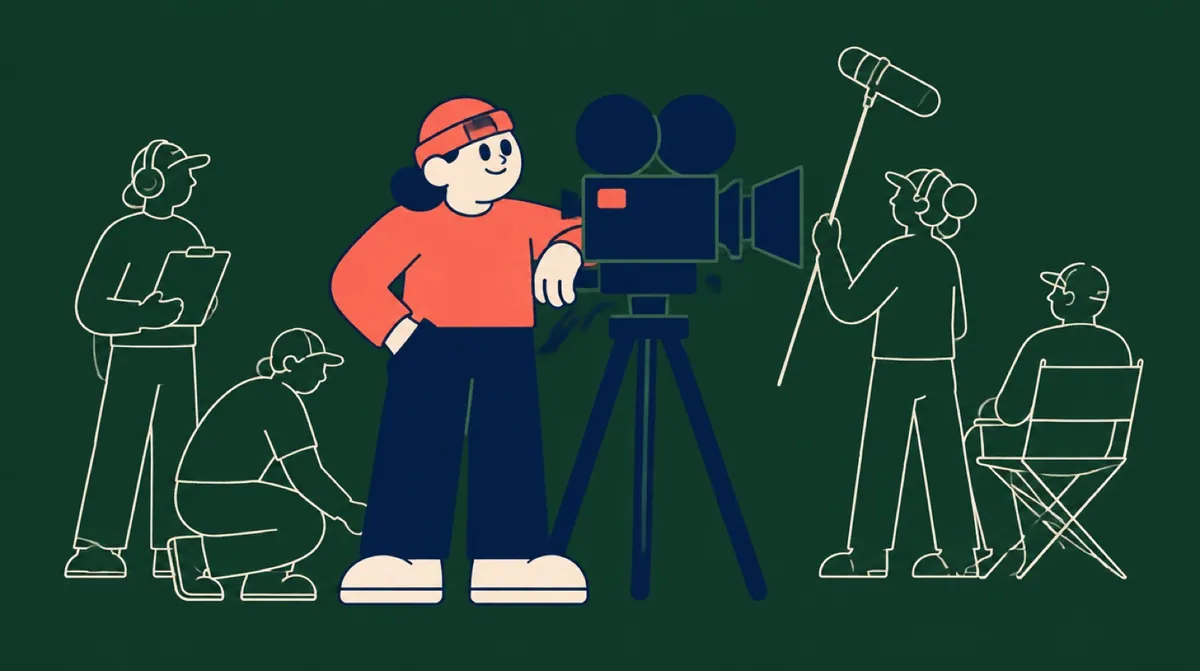
The shoot day is the single most expensive thing most campaigns contain, and it is also the day the industry is organised around: the call sheet, the crew, the client village at the monitor.
What is changing is not the existence of the shoot day but its distribution. The categories that shot because they had no alternative are finding one. The categories that shoot because the shoot is the product are not going anywhere.
Which Shoot Day Goes First
The versioning day. The second and third days that existed to produce variants, pack shots, alternate endings and regional cutdowns are the most exposed, because none of that work was the reason the crew was assembled.
After that, the categories where the subject is an object rather than a performance. A phone, a bottle, a sachet. Those have been part computer-generated for years already, and the remaining human step is being compressed rather than removed.
What The Shoot Day Still Owns
Performance. A face doing something specific and slightly unrepeatable is still the most reliable way to make an audience feel anything, and it remains difficult to fake at a standard that survives a big screen.
Location is the other one. A real street in a real city carries information that no generated background contains, most of it in the details nobody briefed: what people are wearing, what the light does at that hour, what is stacked outside the shop.
The day was never expensive because of the camera. It was expensive because forty people had to agree on the same twelve hours.
What This Does To Production Businesses
It squeezes the middle. The high-end film company with directors people book by name is fine, and so is the small, fast unit that turns out volume. The mid-sized house whose business was competent execution of the standard commercial has the hardest few years, because competent execution is precisely what got cheaper.
The realistic response is not to resist the tools. It is to be explicit about which part of the job is the craft: the casting, the direction of a performance, the ability to make forty people produce one coherent thing in a day. That is the part clients still cannot buy anywhere else.
Related: what generated film still cannot do.
More in The AI Shift.