Who Is Accountable When An AI-Assisted Campaign Gets Something Wrong In Public?
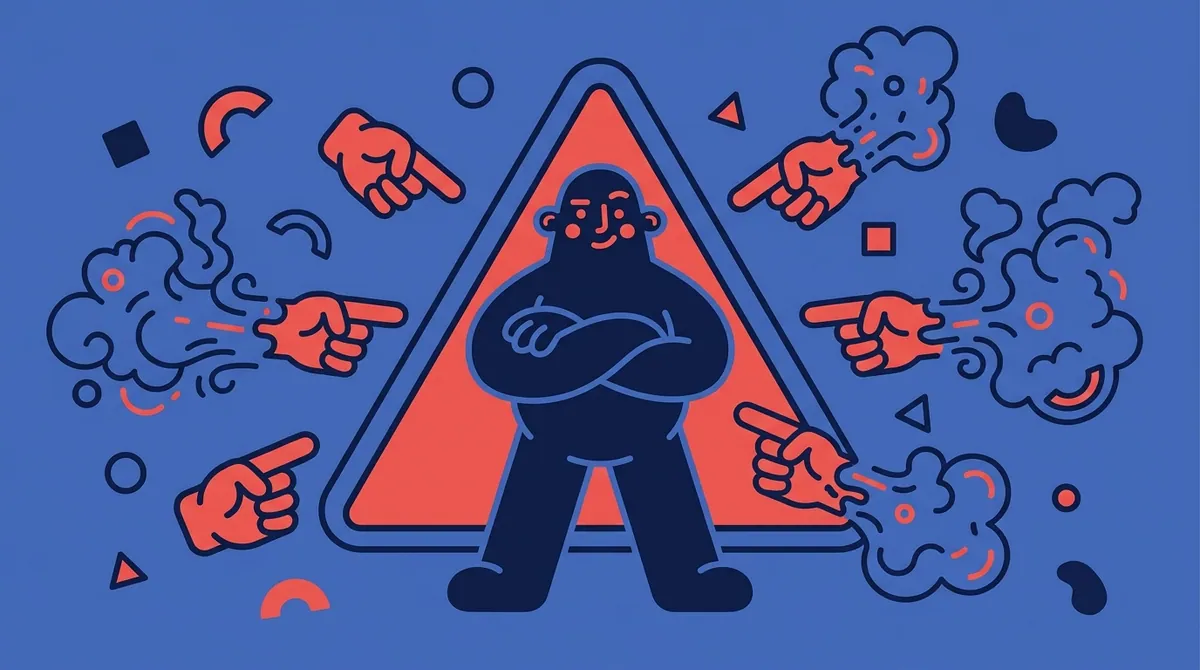
Every time an AI-assisted campaign makes a visible public mistake, a fabricated fact, a culturally tone-deaf image, an oddly generated detail nobody caught, the same instinct appears: blame the AI. That instinct doesn't actually hold up, and treating it as an excuse is where the real risk sits.
AI tools do produce genuine errors on their own, hallucinated details, culturally insensitive imagery generated from biased training data, factual claims that sound plausible but aren't true. Those failure modes are real and well documented. But an AI-generated draft going out into the world as a finished, published campaign requires a human approval step somewhere in between, and it's that approval step, not the tool's initial output, where the actual accountability sits.
Why "the AI did it" doesn't work as an answer
Clients and the public have shown little patience for this explanation when it's been offered, and for good reason: a brand choosing to use an AI tool in its production process is a business decision, and business decisions come with responsibility for the outcomes, including the tool's failure modes. An agency that ships an AI-generated error without catching it is functionally in the same position as one that shipped a human writer's factual error without fact-checking it. The tool changed, the obligation to check before publishing didn't.
What responsible AI use in production actually requires
Agencies handling this well are treating AI-generated output the way they'd treat a junior team member's first draft: useful, often good, but never assumed correct without a defined review step before anything goes public. That means specific checks for the failure modes AI tools are known to produce, fact verification for factual claims, sensitivity review for generated imagery, rather than a general "looks fine" pass that would catch obvious problems but miss the specific ones AI tends to introduce.
The tool can make the mistake. It can't be the one who's supposed to have caught it before the work went live.
What this means for how contracts and process are being rewritten
Some agencies are now formalising this explicitly, documenting who signed off on AI-assisted work at each stage and what specific checks were run, partly to protect clients and partly to protect the agency's own credibility when something does slip through. That paper trail doesn't prevent every mistake. It does make clear, before anything goes wrong, that a human was always going to be the one answering for it.