Will AI Make Client Feedback Better Or More Confusing?
"Make it feel more premium" used to be the kind of feedback an agency had to interpret through guesswork. AI has made that vague note dramatically easier to make specific, and dramatically easier to multiply.
Vague creative feedback has always been one of the more frustrating parts of the client relationship, not because clients are being difficult, but because most people are better at recognising the right answer than describing it in words. AI tools have quietly fixed a real piece of that problem: a client who cannot articulate "more premium" can now generate a rough visual reference themselves and simply say "like this," turning an ambiguous note into something an agency can act on directly.
Where this genuinely sharpens the process
Specific visual references cut down enormously on the back-and-forth that used to happen when an agency guessed at what a vague note meant, produced a revision, and found out it still was not what the client had in mind. A client-generated reference, even a rough one, gives the agency something concrete to respond to on the first attempt rather than the third. That is a genuine efficiency gain, and it is the part of this shift most agencies are happy to see.
Where it starts working against the process
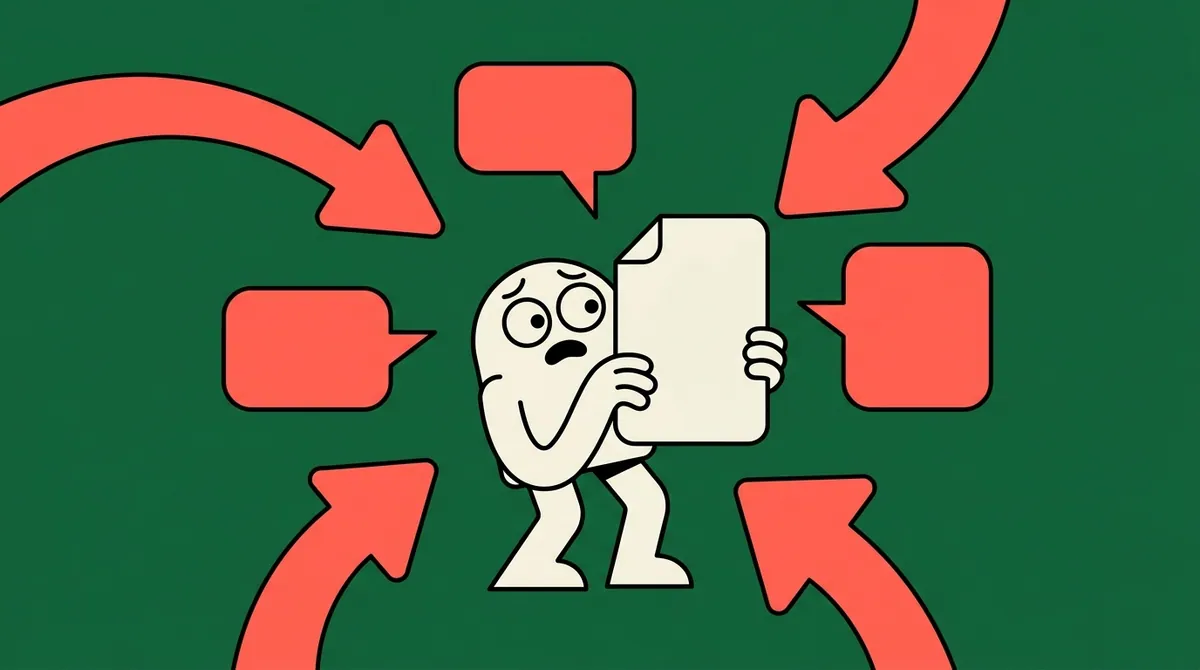
The complication shows up once more than one person in a client organisation starts doing this independently. A marketing director generates one reference, a CMO generates a different one, a regional lead generates a third, and the agency now has to reconcile three competing AI-generated visions instead of interpreting one ambiguous brief. Feedback that used to be centralised through a single brief or a single approving voice can fragment across as many stakeholders as have access to an AI tool, and reconciling that fragmentation is a genuinely harder problem than interpreting vague language ever was.
AI made individual feedback sharper. It also made it easier for an organisation to disagree with itself in higher resolution.
What keeps this from becoming chaos
The agencies navigating this well are pushing clients to consolidate feedback before it reaches the creative team, treating AI-generated references as raw input for a single decision-maker to reconcile rather than as parallel briefs the agency has to somehow satisfy all at once. That single point of accountability was always good practice in client management. AI has simply made it a non-negotiable requirement rather than a nice-to-have, since without it, sharper individual feedback can add up to a noisier collective one.