How Internet Culture Is Changing Festive Advertising in India
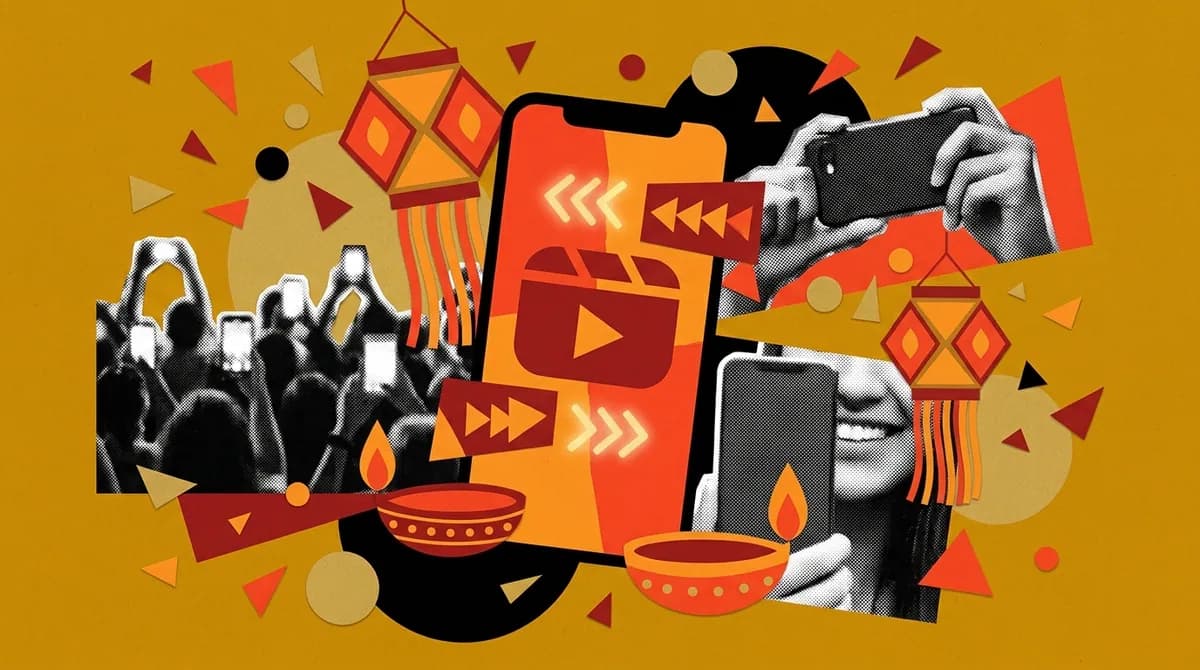
The Indian festive season had a predictable soundtrack: the big Diwali film. How internet culture is changing festive advertising into a creator-led conversation.
For decades, the Indian festive season had a predictable soundtrack: the big-budget Diwali film. A brand would spend most of its year's emotion on one lavishly shot television commercial about family, light and togetherness, run it heavily for a few weeks, and call it the campaign. That model is not dead, but it is no longer where the energy is. Internet culture has moved festive advertising from a single annual film to a fast, participatory, creator-driven conversation, and the brands that still only make the film are increasingly talking to an empty room.
From the film to the feed
The festive moment used to be a broadcast. Now it is a feed. Instead of one commercial, brands run a stream of festive content across the season, reactive and social-first, meeting audiences in the places they actually spend the festival, which is increasingly on their phones. The quick-commerce apps treat Diwali and Holi as peak occasions for topical, witty, everyday social content rather than a single set-piece. The emotion that once lived in a three-minute film is now distributed across dozens of small, timely posts, because that is how the audience now experiences the season.
Personalisation replaced the mass message
Internet-era technology also broke the one-message-for-everyone model. Cadbury's celebrated festive work turned a single ad into thousands, using location data and later generative technology so that the same campaign could promote thousands of small local stores, each ad tailored to a neighbourhood. It is worth being precise about what this was: not social listening, but data-driven personalisation at scale, a festive campaign that used the internet's plumbing to feel local rather than national. The lesson brands took from it is that festive advertising no longer has to speak to all of India in one voice. It can speak to your pin code.
Humour and memes entered the festival
The other shift is tonal. Festive advertising used to be uniformly earnest. Internet culture made room for wit. Zepto's Diwali campaign around rehabilitating the much-re-gifted sweet Soan Papdi, built with an internet-native character and a knowing sense of humour, is a good example of a festive idea that behaves like a meme rather than a greeting card. Its chief business officer, Chandan Mendiratta, runs the brand's marketing like a content studio, and the Soan Papdi work shows what happens when festive advertising is written by people who think in reels and jokes rather than in solemn films. The festival is still emotional. It is now also allowed to be funny.
Creators became the festive medium
Perhaps the biggest change is who delivers the festive message. Where a brand once bought television around Diwali, it now works with creators who fold the brand into their own festive content, in their own homes, in their own languages. That reaches audiences the national film never could, especially in the regional and smaller-town markets where the festival is lived most intensely and where a creator speaking the local language carries more warmth than a glossy metro commercial. The festive campaign has decentralised, from one brand voice to hundreds of creator voices, each trusted by the audience it speaks to.
The risk in the shift
The danger in all this speed and participation is the one that stalks all internet-era advertising: forcing it. A festival is emotionally and often religiously charged, and a brand that jumps on festive trends without genuine relevance, or borrows sacred imagery it does not understand, does not look current. It looks opportunistic, and the backlash during sensitive moments is swift. Internet culture rewards festive advertising that is fluent and affectionate. It punishes festive advertising that treats a festival as just another trend to exploit.
The festive film is not finished, and the best of them still move people. But it is no longer the whole campaign, or even the centre of it. The season now belongs to the feed, the meme, the personalised ad and, above all, the creator, and brands that understand the festival as a live cultural conversation rather than a single annual broadcast are the ones the audience actually celebrates with.