The Risk of Chasing Trends Without a Brand Strategy
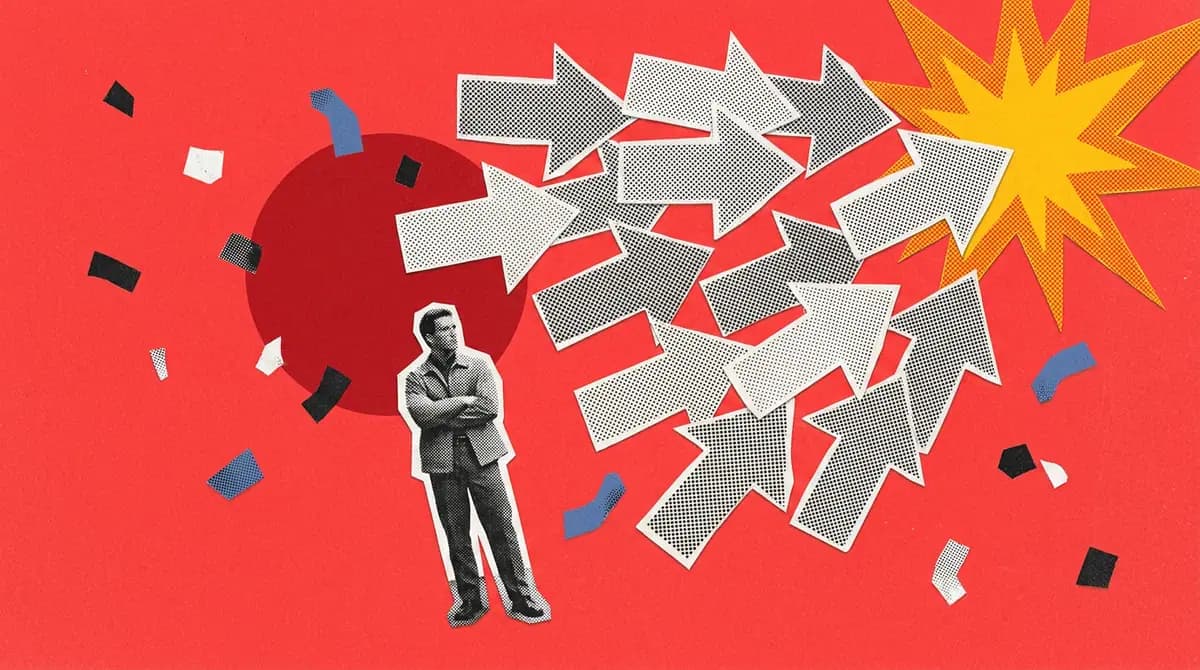
Being on the trending screen feels like the safest thing a social brand can do. It is often the most dangerous. The real risk of chasing trends without a strategy.
Somewhere in every marketing team is a screen showing what is trending, and somewhere in every marketing team is the quiet pressure to be on it. A sound is blowing up, a format is everywhere, a moment is peaking, and the instinct is to jump before it fades. Trend-chasing feels like the safest thing a social brand can do. It is often the most dangerous, because a brand that chases every trend without a strategy underneath it slowly stops being a brand at all.
Sameness is the first cost
The most immediate damage is that trend-chasing makes brands identical. When a format takes off, everyone piles in, and the feed fills with the same joke in slightly different colours. When the "Pawri ho rahi hai" clip swept Indian timelines, a crowd of brands rewrote the line within days, and almost none of them left a trace, because presence is not personality. When India landed Chandrayaan-3, the delivery apps all posted near-identical Moon puns within the hour, and you could not tell them apart. The trend delivered reach and erased distinctiveness at the same time, which is a terrible trade for anyone trying to build a brand.
Speed without judgment is worse
The deeper danger is that trend-chasing rewards speed and punishes thought, and sometimes the thought was the only thing standing between the brand and a disaster. Bombay Shaving Company reacted fast to a trending story about a trolled teenage exam topper and drew a regulatory examination for exploiting a minor's situation. Kent RO reacted fast during the lockdown with an ad implying domestic workers might spread infection, and had to withdraw it and apologise. In both cases the reflex to be part of the moment overrode the question of whether the brand should be. A strategy is, among other things, a list of moments you have decided in advance not to chase.
The question strategy answers
The antidote is not to ignore trends. It is to have a point of view that decides which trends are yours. Viren Noronha of the firm The New Thing reframes the whole impulse with the question every brand should ask before jumping: do I want to win attention, or do I want to create memory. Chasing a trend usually wins a little attention and creates no memory, because the brand contributed nothing only it could have contributed. A strategy is what lets you tell the difference in the moment, when the pressure to post is highest and the clock is loudest.
Dilution is the slow damage
Even when no single trend-chase backfires, the cumulative effect is corrosive. A brand that borrows a different personality every week, chasing whatever is popular, never accumulates one of its own. Its audience learns to expect nothing in particular, because the brand stands for nothing in particular. Distinctiveness is built by repetition of the same recognisable thing, and trend-chasing is the enemy of repetition. Every borrowed trend is a week the brand spent sounding like everyone else instead of like itself.
What discipline looks like
The brands that handle trends well are not the fastest, they are the most selective. They pass on most trends without anxiety, because they know that being absent from a moment costs far less than being generic in it. When they do engage, it is because the trend genuinely connects to who they are, so their version could only have come from them. That looks like restraint, and restraint reads as confidence, which is itself a brand asset. The brand jumping on everything looks needy. The brand that skips most of it and nails the few that fit looks like it knows exactly who it is.
The trend chart is not a to-do list. It is a temptation, and the strategy is what protects the brand from it. Chase every trend and you will be busy, visible and forgettable. Chase only the ones that are actually yours and you will be present far less often, and remembered far more.