Is AI Making Advertising More Creative Or More Predictable?
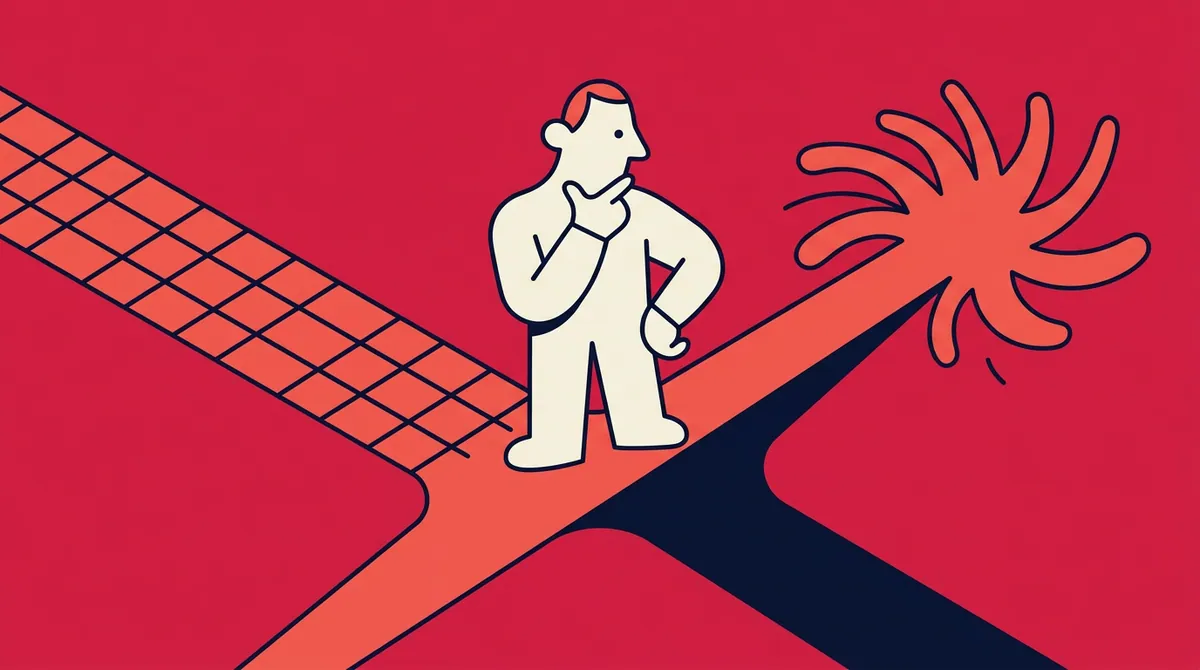
AI is trained on everything that already worked, which means its instinct, left unchecked, is to pull every output back toward the familiar. Whether that makes advertising more creative or more predictable depends entirely on what happens next.
Generative models learn patterns from enormous volumes of existing work, which means their statistically most likely output for any given prompt tends to be the most common, most conventional version of that idea, not the most surprising one. Left to its own defaults, AI has a genuine pull toward the predictable, the campaign concept, the layout, the line that looks like a hundred other things it was trained on. That is a real risk for an industry whose entire value proposition is standing out.
The predictable failure mode is real
Agencies using AI as a shortcut to a finished idea, taking the first competent output and shipping it, are the ones most likely to produce work that feels generic, because the first output is, structurally, the most averaged and least distinctive one the model is likely to generate. This is not a hypothetical concern. It shows up already in the flood of AI-assisted content that reads as competent but forgettable, correct in every technical sense and memorable in none.
But the same tool can push the other way
The same speed that makes it easy to settle for the first predictable draft also makes it cheap to keep exploring past it. A creative team no longer has to choose between exploring ten wildly different directions and hitting a deadline, because AI can produce ten directions in the time it used to take to produce one. Used this way, AI does not replace the human instinct to push past the obvious idea toward something riskier. It removes the production cost that used to make pushing that far impractical on a real deadline.
AI doesn't decide whether advertising gets more creative or more predictable. It just makes both outcomes faster to arrive at.
What actually determines the outcome
The deciding factor is not the technology at all, it is whether a creative team treats the first AI-generated output as a destination or as a starting point. Teams that stop at the first competent draft, because it is good enough and the deadline is close, are the ones producing more predictable work at greater volume than before. Teams that use the freed-up time specifically to keep pushing past the obvious answer, treating speed as room to explore rather than room to finish early, are the ones getting more genuinely original work out of the same tools. AI made both paths faster. It did not choose which one any given agency takes.